
Welcome to WordPress. This is your first post. Edit or delete it, then start writing!
Three Valuable Dental Treatments
Three Valuable Dental Treatments
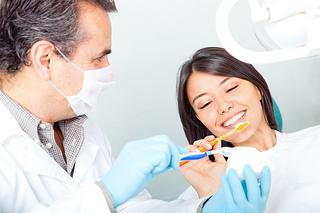
In our office, we customize treatment for every patient. Amid all of the fillings, crowns, and veneers, we find there are three treatments that are most valuable when offering our patients options: dental implants, bite guards, and teeth whitening.
Dental implants are a great tool for those who have lost teeth from trauma, genetic predetermination, decay, or fracture. Technology and design have allowed these implants to look and function like a natural tooth. They are a great investment when maintaining bone structure and smile presentation.
In our fast-paced lives, people take their stress and tension out on their teeth. Clenching and grinding, or bruxism, is on the rise. This is traumatic to crowns, fillings, and natural teeth. Headaches are a symptom of bruxism and when not treated, jaw joint inflammation and pain are a result. Bite guards are often worn at night when most of the action occurs. Many are not even aware of this habit until presented with evidence of cracked teeth, broken crowns, and pain.
Last, but most definitely not least, is whitening. Tooth whitening is safe and effective. There are different types of tooth whitening: in-office, custom trays, and over-the-counter strips. Each is effective, though at different levels. First, and your best option, is done in the office. The gums are protected and a gel with high potency is applied to the teeth. Some methods have a light shining on teeth and some have timed intervals without the light. Next are custom trays, which require an impression of your bite. Trays are picked up at a later date. At that point, instructions are given and the gel and trays are delivered. A final option is whitening strips, which can be found in many local stores. They are effective, though the whitening process is slower and some areas may not whiten.
Each treatment has risks and rewards that should always be considered prior to any treatment. Implants must be well cared for. Bite guards must be an accurate fit and worn regularly. Comfort is most important. Whitening causes temporary sensitivity and some people’s teeth whiten better than others.
Consider what your needs are, and then customize your wants to fit into the equation. A little stability from implants, protection from a bite guard, and a brilliant smile may be just what the doctor ordered. And if you have any questions, don’t hesitate to call our office, Parkway Mall Dental Office.
Does Your Child Need Endodontic Treatment?
Does Your Child Need Endodontic Treatment?
Baby teeth come with a built-in expiration date. That charming first smile is meant to make way for a healthy, beautiful adult smile. Unfortunately, before they are ready to make way for permanent teeth, primary teeth can be affected by decay, trauma, or infection—problems which can lead to damage to the pulp within the tooth. If your dentist tells you that your child’s tooth needs specialized endodontic treatment, is treatment really that much better for your child than losing a baby tooth prematurely?
Quite often, the answer is yes!
Baby teeth do much more than serve as temporary stand-ins for adult teeth. They are essential for:
- Biting and chewing—a full set of baby teeth helps your child develop proper chewing, which leads to healthy digestion. And chewing also helps build face and jaw muscles.
- Speech development—primary teeth help guide speech production and pronunciation.
- Spacing—a baby tooth serves as a place holder for the adult tooth waiting to arrive. If a primary tooth is lost too early, the remaining baby teeth may drift from their proper location. This, in turn, can cause overcrowding or misalignment of the permanent teeth when they do erupt.
Baby teeth, like adult teeth, contain living pulp tissue. The pulp chamber inside the crown (the visible part of the tooth) and the root canals (inside each root) hold nerves, blood vessels, and connective tissue. When the pulp is damaged by trauma or infected, a baby tooth can still be saved with endodontic treatment. Endodontic treatment in baby teeth can take two forms.
- “Vital” pulp is pulp that can be saved. Vital pulp therapy uses procedures to deal with damaged pulp inside the crown, or visible part, of the tooth. Pulp therapy can be used on teeth when only the top of the pulp has been affected by decay, limited exposure, infection, or trauma, but the root pulp remains healthy. Specific treatment will depend on the nature of the pulp injury, and a crown will usually be placed over the tooth after treatment to protect it.
- With non-vital pulp, your dentist will probably recommend a traditional root canal procedure. All of the pulp tissue will be removed from inside the crown and the roots, and the pulp chamber and root canals will then be cleaned, disinfected, shaped, and filled. Finally, because the treated tooth will be more fragile, a crown will be used to protect the tooth from further damage.
There can be good reasons for extracting a seriously damaged baby tooth, and there are situations where preserving the tooth is the best and healthiest option for your child. Discuss your options with the doctor when you visit our Scarborough, office for the safest, most effective way to treat your child’s compromised tooth.

Dry Mouth and How to Treat It
Dry Mouth and How to Treat It
In fancy medical terms, dry mouth is known as xerostomia. It’s really just what it sounds like: a condition in which you don’t have enough saliva to keep your mouth moist. Dry mouth can be the result of certain medications you’re taking, aging, tobacco use, nerve damage, or chemotherapy.
Depending on whether you’re aware of the cause of your dry mouth, here are some simple ways to keep it at bay:
- Avoid drinks that contain alcohol or caffeine
- Avoid tobacco use, or lower your consumption of tobacco
- Floss after every meal
- Brush your teeth after every meal using a fluoride toothpaste
- Avoid foods that have a high level of salt
- Stay hydrated and drink water frequently
- Consider using a humidifier at night
If you have any questions about dry mouth and how it is affecting you, give our Scarborough, office a call or make sure to ask the doctor during your next visit!

You broke your tooth; now what?
You broke your tooth; now what?
You may have bitten down on a hard food or object, or perhaps you had a cavity that weakened your tooth. Either way, your tooth is now broken, and the steps you take to care for it will determine whether you get to keep your natural tooth or not. Millions of people suffer from broken teeth every year, so you are not alone. However, that does not mean your newly cracked tooth does not need immediate attention.
What is a broken tooth?
A broken tooth is one that has been fractured, chipped, cracked, broken apart, or completely knocked out of the mouth. You may or may not feel your tooth break, depending on the extent of the break and whether your tooth was decaying prior to the break. It is usually very easy to diagnose a broken tooth, because the evidence will be visible. In the case of hairline cracks in the teeth, you may start to note a sensitivity to hot or cold in the neighborhood of the fracture.
The Right Way to Handle a Broken Tooth
As soon as you know your tooth is broken, chipped, or fractured, make an appointment to visit our emergency dental office. Even the tiniest fractures require attention: bacteria can infect the fractured area, which could cause you to lose the tooth altogether.
Until you are in our office, you can manage your pain using over-the-counter pain medication, such as Tylenol, or you can apply a cold compress to prevent swelling and inflammation. Be sure to rinse your mouth with warm salt water after every meal until you are able to visit us.
Keep in mind that while pain medication is an effective way to manage a broken tooth at home, it is only a temporary fix. Broken teeth should not be treated solely at home, and over-the-counter solutions are not substitutions for professional dental care. Failing to make an appointment with the doctor after breaking or chipping a tooth can place your health at risk.
Treating your broken tooth will depend on the type of break you have and how much of the tooth is affected. A minor chip or tiny fracture line may easily be repaired with bonding. On the other hand, a more serious break that exposes the tooth’s pulp may require a root canal or extraction to prevent infection. Ultimately, our team here at Parkway Mall Dental Office will explain to you the best treatment plan based upon our evaluation of the condition and extent of your break.
If you have broken, cracked, chipped, or fractured one or more of your teeth, don’t hesitate to contact our office immediately. We specialize in emergency dental care and are available to serve you 24 hours a day, seven days a week.

The Origins of Valentine’s Day
The Origins of Valentine’s Day
When we think of Valentine’s Day, we think of cards, flowers, and chocolates. We think of girlfriends celebrating being single together and couples celebrating their relationship. We think of all things pink and red taking over every pharmacy and grocery store imaginable. But what the doctor and our team would like to think of is when and how this joyous, love-filled day began.
Several martyrs’ stories are associated with the origins of Valentine’s Day. One of the most widely known suggests that Valentine was a Roman priest who went against the law at a time when marriage had been banned for young men. He continued to perform marriage ceremonies for young lovers in secret and when he was discovered, he was sentenced to death.
Another tale claims that Valentine was killed for helping Christians escape from Roman prisons. Yet another says that Valentine himself sent the first valentine when he fell in love with a girl and sent her a letter and signed it, “From your Valentine.”
Other claims suggest that it all began when Geoffrey Chaucer, an Englishman often referred to as the father of English literature, wrote a poem that was the first to connect St. Valentine to romance. From there, it evolved into a day when lovers would express their feelings for each other. Cue the flowers, sweets, and cards!
Regardless of where the holiday came from, these stories all have one thing in common: They celebrate the love we are capable of as human beings. And though that’s largely in a romantic spirit these days, it doesn’t have to be. You could celebrate love for a sister, a friend, a parent, even a pet.
We hope all our patients know how much we love them! Wishing you all a very happy Valentine’s Day from the team at Parkway Mall Dental Office!
Oral Health Problems: An indicator of overall health problems?
Oral Health Problems: An indicator of overall health problems?
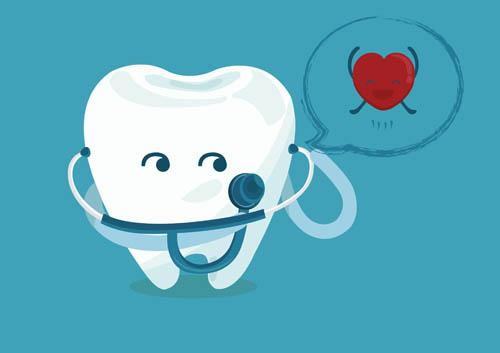
If you are like many people, you might think of your oral health as separate from your overall health. After all, most dental coverage plans are distinct from health care coverage. However, your oral health goes far beyond being able to chew nutritious and enjoyable foods. Oral health problems may be an indicator of a variety of other health problems.
Links between Oral Health and Overall Health
In the late 1980s, researchers noticed a trend among patients who had recently suffered from heart attacks. As the Journal of the American Dental Association reported, they observed that these patients were more likely to have dental caries or cavities, periodontitis or inflammation around the tooth, and other forms of gum disease. Later studies found similar results, and dentists and doctors now recognize poor oral health as a risk factor for a variety of heart conditions, such as heart attacks, atherosclerosis, and coronary heart disease.
There are even more links between oral health problems and overall health problems. Some individuals do not find out that they have Type 2 diabetes until a dentist sees that they have periodontitis. If you have diabetes, worsening periodontitis can indicate that your diabetes is not under control.
Poor oral health is also associated with rheumatoid arthritis. Furthermore, poor oral health puts you at higher risk for respiratory infections, such as pneumonia, because harmful pathogens can enter your body through your mouth.
Take Care of Your Teeth
Keeping your teeth healthy remains important, especially as you grow older. Older adults are more prone to dental caries and other oral health problems, as well as to chronic diseases. While taking care of your oral health might not prevent a specific disease, a healthy mouth is a significant factor in your overall health.
You can take care of your teeth by continuing to brush twice a day and floss every day. Avoid consuming too many sugary and starchy foods, and drink water after each meal or snack to rinse your teeth. See the doctor for regular checkups, and contact Parkway Mall Dental Office if you have any concerns about your teeth or gums.
The Best Brush of the Day
The Best Brush of the Day
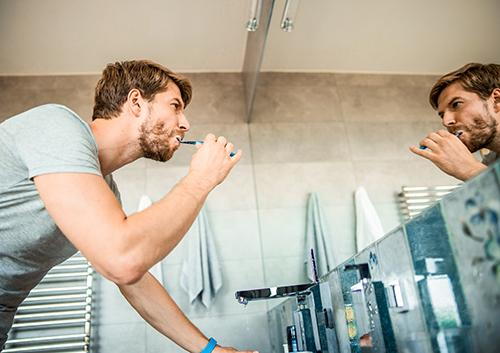
Imagine that you’re only going to brush your teeth once tomorrow. Don’t worry, we know you would never skimp on your dental hygiene like that, but let’s just pretend for a moment. When would be the best time to brush? When you wake up? During the day? Or perhaps before you go to bed?
Actually, whenever you choose to brush, you’ll receive important overall dental benefits as well as specific benefits tied to the time of day. Let’s explore your daily schedule to see why.
Brushing in the Morning
Brushing when you first jump out of bed produces several positive results.
- Cleaning plaque from your teeth
Plaque is a sticky film made up of oral bacteria, food particles, and saliva. As you sleep, these oral bacteria multiply and produce acids which attack the minerals in your enamel, leaving weak spots which, over time, can become cavities. Brushing removes these bacteria and acids from your enamel before they cause serious harm.
Moreover, plaque hardens if it’s left undisturbed, turning into tartar in a relatively short time. And once plaque becomes tartar, it must be removed by a dental professional. Brushing first thing in the morning removes this plaque buildup and helps prevent tartar from forming.
That bacterial growth we mentioned? It’s also responsible for morning breath. If nothing else, brushing when you wake up means greeting a fresh day with fresh breath, and that’s reason enough to pick up your brush in the morning.
Brushing During the Day
Brushing after meals and snacks also has a lot to recommend it.
- “Leftovers” lead to cavities
Foods, especially foods rich in sugar and carbohydrates, are converted by oral bacteria into acids which weaken enamel and lead to cavities. When food particles remain in the mouth after a meal, bacteria have more time and more fuel to manufacture these acids.
- Acidic foods also affect your teeth
If you have eaten something acidic, such as citrus fruits, sodas, or pickled anything, the acids from these foods can temporarily weaken the mineral strength of your enamel. But brushing immediately after eating or drinking acidic foods can damage weakened enamel. Better to rinse well with water and brush after half an hour or so.
Brushing at Night
Growing up, you probably received regular reminders to brush before bedtime—for several really good reasons:
- Saliva production slows while you sleep
During the day, saliva helps to wash away food particles and neutralize acidity in our mouths. It also contains proteins and minerals which help keep tooth enamel strong. But as we sleep, saliva production slows dramatically, and our bodies can’t remove bacteria and acids as effectively.
- Food particles fuel bacterial growth
If you haven’t brushed since morning, you’ve accumulated a whole day’s worth of food particles from meals and snacks. Remember, oral bacteria use the sugars and carbs we eat as fuel to produce the acids which attack our tooth enamel throughout the night.
- Brushing helps prevent both of these problems
Brushing your teeth before bed not only cleans away the accumulated food particles of the day, but also eliminates the plaque and bacteria which would have a much easier time sticking to your teeth without that daytime saliva flow to wash them away.
So, When’s the Best Time to Brush?
In the morning, during the day, at night —there are solid advantages to brushing any time of day. The question isn’t so much when to brush as how often you should brush.
While many dental professionals consider brushing before bedtime as the most important brush of the day, brushing at least two full minutes, at least twice during a 24 hour period, is a necessity for basic dental hygiene. (And don’t forget to floss at least once each day.)
If you wear orthodontic appliances, if you’ve been eating sugary snacks, if you’re showing signs of gingivitis or getting more than your share of cavities, if you want to reduce the chance of plaque and tartar buildup, or if you simply want to make sure you’re doing everything you can to maintain your overall dental health, brushing after meals is also highly recommended.
Talk to the doctor about your brushing habits the next time you visit our Scarborough, office. No need to use your imagination to plan your best brushing schedule. We have all the answers you need to help you brush your way to your best—and healthiest—smile!

Whitening an Artificial Tooth
Whitening an Artificial Tooth
It’s a bit of a contradiction: you are justifiably proud of your beautiful dental work, but you don’t want it to be obvious when you smile. Dental prosthetics such as veneers and crowns should blend perfectly with your natural teeth. If you have noticed your veneers are a different shade than your other teeth, or have a crown that is visibly darker than the teeth surrounding it, you are probably wondering if there is any way to lighten and whiten an artificial tooth surface. There is no one right answer, but let’s examine a few common scenarios to find the best solution for you.
If You Haven’t Started Your Dental Work and Want a Whiter Smile
If you are planning on getting a veneer or a crown, it’s best to take advantage of teeth whitening before you have the work done. Choosing a shade of bright white for your veneers and then trying to whiten your natural teeth to match it afterward is almost impossible. It’s a good idea to talk to us about whitening beforehand, and, if this is the best way to achieve the look you want, the doctor can match the color of your new prosthetic to your newly whitened smile. The goal is to make your new veneer or crown a perfect match to your natural teeth.
If You Have Existing Veneers, Crowns, or Other Artificial Surfaces
Porcelain veneers cannot be whitened, but the good news here is that they don’t stain the way natural teeth do. Unlike our teeth, porcelain is non-porous, so it is very difficult for typical culprits such as coffee, tea, or red wine to have as much effect. Any surface stains that appear can usually be gently removed with a professional cleaning and polishing, where we will take care not to scratch the delicate surface of the veneer. Porcelain crowns and implants, like veneers, can be brightened with a professional surface cleaning, but their original color cannot be changed.
Composite veneers and composites used in dental bonding are more porous and therefore more likely to stain. They are also immune to whitening, but might respond somewhat to a careful professional polishing at our Scarborough, office.
Finally, if the color of your existing dental prosthetics is a concern, replacement is an option we can consider together.
Whether you have existing veneers and crowns or are planning future dental work, please talk with us about achieving a seamless blend of old and new for a beautiful, natural smile. It’s a bit of a contradiction: the best work is the work no one notices!

Do you suffer from sleep apnea?
Do you suffer from sleep apnea?
At Parkway Mall Dental Office, we know our patients love a good amount of rest each night in order to be energized for the day and week ahead. After all, without enough sleep, exhaustion during the day is the most immediate consequence.
Sleep apnea is a sleep disorder that could be an indicator of serious health problems. The most common symptom is loud snoring, but the condition is characterized by breathing that repeatedly starts and stops throughout the night, leaving you feeling tired in the morning. Other serious effects from sleep apnea could be potentially dangerous to your health if left unaddressed, a great reason to visit the doctor.
Besides losing precious hours of sleep, sleep apnea also elevates the risk of heart attack and stroke, and may cause other conditions such as depression, irritability, high blood pressure, memory loss, and sexual dysfunction.
Anyone can develop sleep apnea, but it is more common among middle aged adults who are overweight. the doctor can help you determine the cause and suggest possible treatment.
A common treatment for sleep apnea is an oral device that is designed to help keep the airway open. By bringing the jaw forward, the device opens the airway and discourages snoring. the doctor and our team are experienced in sleep apnea appliances, and can prescribe a fitted device, as well as monitor its success each time you visit.
A continuous positive airway pressure mask, also known as a CPAP, is among the other treatment options you may opt for. A mask is fitted over the mouth and forces oxygen through the throat while you sleep, and the pressure holds the soft tissue and throat muscles open.
If you think you may be suffering from sleep apnea, visit our Scarborough, office. Our team at Parkway Mall Dental Office can help you return to getting a better night’s sleep.